When Caring for Someone You Love Starts to Wear You Down
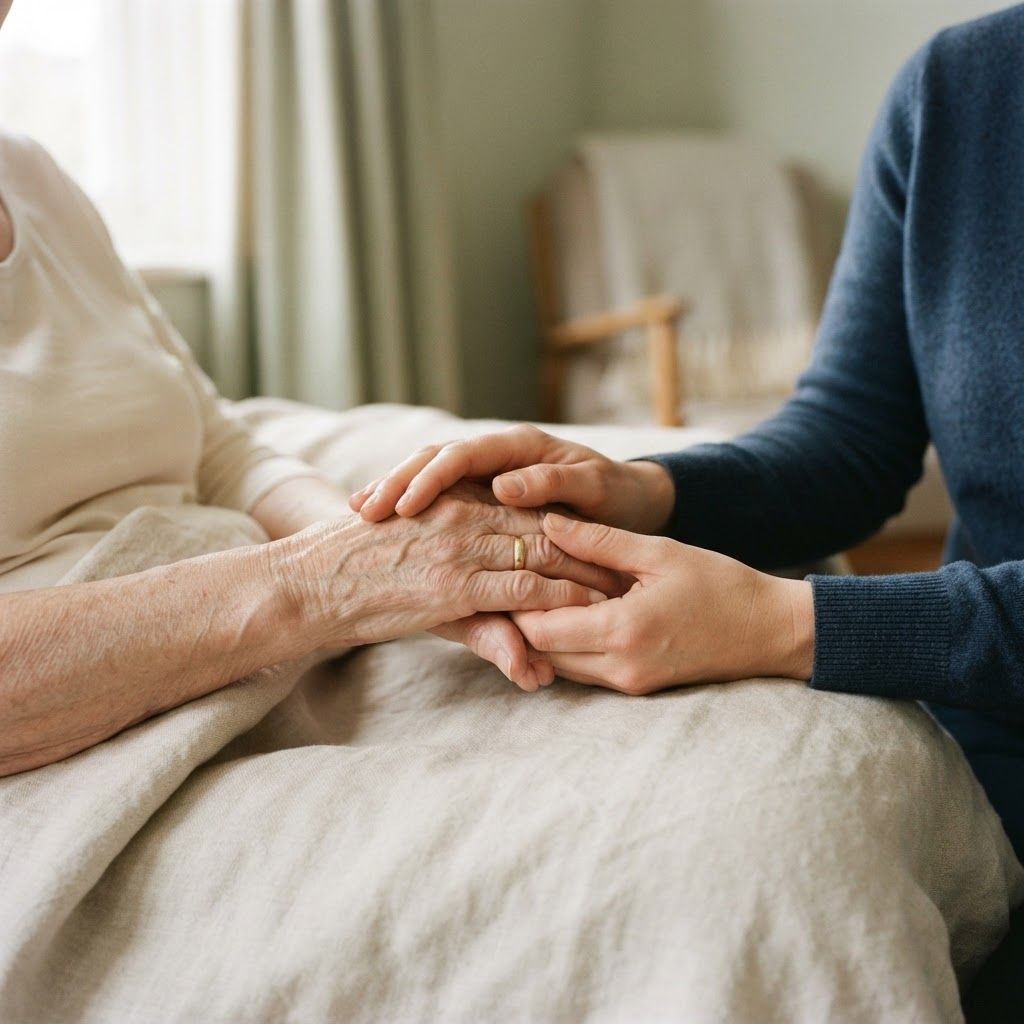
There is a particular kind of exhaustion that comes with caring for someone with dementia. It isn't always fixed by sleeping late on Saturday, and it may not disappear after a vacation. Telling someone who is overwhelmed by caregiving to “make time for self-care” can feel almost absurd when the problem is that there is no one else available to take over.
For many families, caregiving isn't one task. It is dozens of small responsibilities layered on top of ordinary life: medications, appointments, meals, transportation, insurance calls, bills, supervision, repeated questions, disrupted sleep and the constant mental calculation of what might go wrong next.
Over months or years, that load can change more than your mood. It can change your body.
Caregiver, care partner—or just someone who loves them
You'll see both caregiver and care partner used in dementia care. Care partner has become increasingly common and, in many situations, I prefer it. Particularly early in a disease, care is still a relationship. It doesn't flow in only one direction. Government programs, insurance benefits and research still frequently use caregiver, though, so it is an important term to know when looking for help.
But many people don't identify with either one. You might simply think, I'm her daughter. He's my husband. Of course I take Dad to his appointments.
Then, almost without realizing when it happened, you become the person managing medications, meals, transportation, finances, medical decisions, bathing, dressing, toileting and safety.
I know something about that transition myself.
Near the end of my mom's life, I became one of her caregivers. I was still working, which meant that every day involved a calculation I never felt entirely comfortable making: Is she okay if I leave? What if something happens while I'm gone? How long can I be away? And then I would go to work.
When I came home, there were meals to prepare. I helped her bathe, use the toilet and get dressed. There were medications and appointments and all of the ordinary things that still needed to happen around us. I was tired in a way that is difficult to describe unless you've experienced it. I remember feeling tired literally to my bones.
It affected my marriage, too, not because anyone had done anything wrong, but because there are only so many hours in a day. Much of the time and attention I would normally have spent with my husband suddenly belonged somewhere else. That's something we don't talk about enough. Caregiving doesn't happen in isolation. It rearranges an entire family.
People told me then, “You'll be so glad you did this. This time is precious.” I understood what they meant, but when you're in the middle of it, precious isn't necessarily the word that comes to mind. Sometimes you're just exhausted.
Now that my mom is gone, I understand those words differently. I am incredibly grateful that I was able to care for her, and I would not trade that time. Things that felt like work then—the meals, helping her dress, simply being there when she needed me—look different from where I stand now. They were right. That time was precious.
But I think we do caregivers a disservice when we stop the conversation there. Something can be precious and exhausting. You can be grateful to care for someone and desperately need a break from caring for them. You can love someone completely and still feel frustrated, resentful, lonely or overwhelmed. You can know that someday you may miss this time and still struggle to get through today.
None of those things cancels out the others. And what caregivers describe as feeling completely depleted isn't just an emotional phenomenon. Researchers have been trying to understand what prolonged caregiving stress does to the body for decades.
What happens when the stress doesn't stop?
A large systematic review of 151 studies used dementia caregiving as a real-world model of chronic stress. Researchers found evidence of changes in cortisol regulation in many of the studies, although findings involving cardiovascular and immune markers were much less consistent.1
That distinction matters. The science does not tell us that caregiving inevitably makes someone physically ill. A separate meta-analysis found only small differences in inflammation and immune function between caregivers and noncaregivers, and some of the better population-based studies found little or no difference.2 A later longitudinal study also found little evidence that becoming a caregiver produces widespread increases in inflammatory biomarkers.3
So the biology is complicated. But that may be part of the point. There isn't one laboratory value that measures what caregiving is taking out of someone.
Think instead about what chronic caregiving actually looks like. There may be no clear moment when the brain gets the message that the emergency is over. There is another nighttime awakening, another fall, another appointment, another change in behavior, another decision. Even when nothing is actively wrong, part of your attention may remain on the person you are caring for.
Sleep is one place where the effect becomes easier to measure. A 2019 systematic review and meta-analysis looked at 35 studies involving 3,268 dementia caregivers. Caregivers had poorer sleep quality and lost an estimated 2.42 to 3.50 hours of sleep each week compared with similar adults who weren't providing care.4 Three hours may not sound catastrophic until you accumulate it week after week while someone is also working, managing a household and remaining alert to another person's needs.
Then there is the emotional burden: anxiety, isolation, financial pressure and changing relationships. With progressive diseases such as dementia, there is often anticipatory grief as well. Studies of dementia caregivers describe grief that can begin long before death, as families experience repeated losses in companionship, independence, identity and the relationship they once knew.5,6
That is an extraordinary amount for one person to carry.
I also notice how often caregivers qualify what they say: I love her, but… I'd do anything for him, but… I don't mean to complain, but…
Why should someone have to prove how much they love a person before they're allowed to say they're exhausted?
Needing help doesn't tell us how much someone loves the person they're caring for. And telling an overwhelmed caregiver to “take care of yourself” isn't particularly useful if we don't also talk about how they are supposed to do that. Sometimes self-care isn't a yoga class. Sometimes it's another human being taking over for four hours.
What help actually looks like
Respite care is one of those options, although families often encounter the term without anyone explaining what it means. Respite simply means temporarily transferring caregiving responsibilities to someone else so the primary care partner can step away. Someone may come into the home, the person with dementia may attend an adult day program or, in some circumstances, respite can involve a short stay in a facility.
And what you do with that time is up to you. You can sleep, see your own doctor, have dinner with your spouse, go grocery shopping alone, meet a friend or sit somewhere quiet and do absolutely nothing.
Looking back, I wish more caregivers were told that they don't have to wait until they are completely depleted before respite becomes justified. Accepting help isn't taking time away from the person you love. Sometimes getting a break allows you to return with more patience and energy and to actually be present during the time you do have together.
Unfortunately, the United States does not have one universal caregiver benefit, and coverage depends on insurance, income, disability status, location, veteran status and medical circumstances. Still, it is worth finding out what is available before assuming that all help has to be paid for out of pocket.
Traditional Medicare generally does not function as long-term custodial-care insurance, so it does not ordinarily pay someone to stay with a person with dementia simply because the family caregiver needs time away. There is an important exception for people receiving the Medicare hospice benefit. Medicare covers short-term inpatient respite care arranged as part of hospice when the hospice team determines it is needed, although the beneficiary may pay 5% of the Medicare-approved amount.7 For families approaching the end of life, this is a benefit worth knowing exists.
Medicaid home- and community-based programs vary considerably by state, but eligible individuals may have access to services designed to help them remain safely at home. There is also a federal program many families have never heard of: the National Family Caregiver Support Program, funded through the Older Americans Act. Through state and local aging networks, it supports information and care navigation, counseling and support groups, caregiver training, respite and limited supplemental services. Caregivers of people with Alzheimer disease and related dementias may qualify regardless of the age of the person receiving care.8
A good place to start is your local Area Agency on Aging. The question can be as simple as: “What respite or family caregiver programs are available where I live?”
Families caring for a Veteran should also investigate VA caregiver programs. VA respite can include a home health aide, adult day health care or temporary nursing-home care, depending on eligibility, clinical need and local availability.9 The VA's Program of Comprehensive Assistance for Family Caregivers offers additional support to eligible families, and qualifying primary family caregivers can receive benefits that may include a monthly stipend, mental health counseling, health coverage when otherwise uninsured and at least 30 days of respite care each year.10
Caregiving has followed people to work, too
For decades, when employers talked about “family benefits,” much of the conversation centered on raising children. But employees don't stop having family responsibilities when their children grow up.
The 2025 Caregiving in the US report from AARP and the National Alliance for Caregiving estimated that 63 million Americans—about 1 in 4 adults—are family caregivers, and roughly 7 in 10 working-age family caregivers are employed.11 That means millions of people are doing exactly what I was doing: going to work while part of their attention remains somewhere else.
Some employers are beginning to acknowledge this reality with elder-care navigation, backup-care programs and other caregiver benefits. Best Buy, for example, has partnered with caregiving platform Wellthy to provide eligible employees with personalized caregiving support. Wellthy describes help locating elder care and in-home services, organizing appointments, managing paperwork and coordinating providers.12
That kind of benefit recognizes something important. Caregiving consumes time not only through hands-on care, but through the enormous amount of invisible administrative work surrounding it.
This is not yet universal. It should be more common, because sometimes what a working care partner needs isn't counseling. It's the ability to take Mom to neurology at 2 p.m. without pretending they have a dentist appointment.
If you're working while caring for someone, it is worth looking beyond the health insurance section of your employee benefits. Ask specifically about elder-care or backup-care benefits, dependent-care assistance, caregiver leave, flexible scheduling, employee assistance programs and care-navigation services. You may have a benefit you didn't know was intended for you.
There is another kind of help that doesn't replace caregiving hours but can make them feel considerably less lonely.
Friends matter enormously, but there are some things that are difficult to explain to someone who hasn't lived it. How do you explain that your mother asked the same question 30 times today and you know she can't help it, but by question 31 you wanted to scream? How do you explain what it's like when your spouse no longer remembers something enormously important to your marriage? Or that you desperately want one day away from someone you desperately don't want to lose?
A good caregiver support group removes some of that explanation. People already understand.
Support groups also no longer have to mean finding a community center with a meeting every second Tuesday at 10 a.m. The Alzheimer's Association offers virtual as well as in-person support groups and operates ALZConnected, a free online community for people affected by Alzheimer disease and other dementias.13
That is important for people living in rural communities, people without reliable transportation and people facing the most obvious caregiving problem of all: I can't go to a caregiver support group because I can't leave the person I am caring for.
Your support system can live on your laptop.
It can be precious and still be hard
I understand now why people told me that the time I had caring for my mom was precious. It was. I would give a great deal to have some of that ordinary time back—the meals, the conversations, even some of the things that exhausted me then.
But knowing how much I treasure it now doesn't require me to rewrite what it was like while I was living it. It was precious, exhausting, an act of love and, yes, work. All of those things can be true at the same time.
I think that's why we need to talk differently about caregiver burnout. We shouldn't ask people to become endlessly more resilient while leaving the circumstances around them unchanged. We should make it easier to ask for help, easier to find respite, easier to keep working when you need to work and easier to admit that sometimes caring for someone you love is incredibly hard.
Needing help does not diminish the care you are giving. Sometimes it simply means one person has been carrying a job that was never meant to be done alone.
References
- Allen AP, Curran EA, Duggan Á, et al. A systematic review of the psychobiological burden of informal caregiving for patients with dementia: focus on cognitive and biological markers of chronic stress. Neurosci Biobehav Rev. 2017;73:123-164. doi:10.1016/j.neubiorev.2016.12.006
- Roth DL, Sheehan OC, Haley WE, Jenny NS, Cushman M, Walston JD. Is family caregiving associated with inflammation or compromised immunity? A meta-analysis. Gerontologist. 2019;59(5):e521-e534. doi:10.1093/geront/gnz015
- Roth DL, Haley WE, Sheehan OC, et al. The transition to family caregiving and its effect on biomarkers of inflammation. Proc Natl Acad Sci U S A. 2020;117(28):16258-16263. doi:10.1073/pnas.2000792117
- Gao C, Chapagain NY, Scullin MK. Sleep duration and sleep quality in caregivers of patients with dementia: a systematic review and meta-analysis. JAMA Netw Open. 2019;2(8):e199891. doi:10.1001/jamanetworkopen.2019.9891
- Dehpour T, Koffman J. Assessment of anticipatory grief in informal caregivers of dependants with dementia: a systematic review. Aging Ment Health. 2023;27(1):110-123. doi:10.1080/13607863.2022.2032599
- Rodriguez Colmenares NA, Alvarez L, Gilbreath J, et al. Anticipatory grief among caregivers of people living with dementia: a scoping review. Palliat Support Care. 2026;24:e130. doi:10.1017/S1478951526102478
- Centers for Medicare & Medicaid Services. Hospice care coverage. Medicare.gov. Accessed September 12, 2026. https://www.medicare.gov/coverage/hospice-care
- Administration for Community Living. National Family Caregiver Support Program. US Department of Health and Human Services. Accessed September 12, 2026. http://acl.gov/programs/support-caregivers/national-family-caregiver-support-program
- US Department of Veterans Affairs. Respite care. Geriatrics and Extended Care. Accessed September 12, 2026. https://www.va.gov/geriatrics/guide/longtermcare/respite_care.asp
- US Department of Veterans Affairs. Program of Comprehensive Assistance for Family Caregivers. Accessed September 12, 2026. https://www.caregiver.va.gov/CAREGIVER/support/support_benefits.asp
- AARP, National Alliance for Caregiving. Caregiving in the US 2025. AARP Public Policy Institute; 2025. doi:10.26419/ppi.00373.001
- Wellthy. Connect with Wellthy, Best Buy's caregiving support and backup care partner. Published October 22, 2025. Accessed September 12, 2026. https://wellthy.com/blog/connect-with-wellthy-best-buys-caregiving-support-and-backup-care-partner/
- Alzheimer's Association. Support groups. Accessed September 12, 2026. https://www.alz.org/help-support/community/support-groups
This article is provided for informational and educational purposes only and does not constitute medical advice. Always consult a qualified healthcare professional for questions about diagnosis, treatment, or your personal health.