When Every Conversation Turns Into an Argument
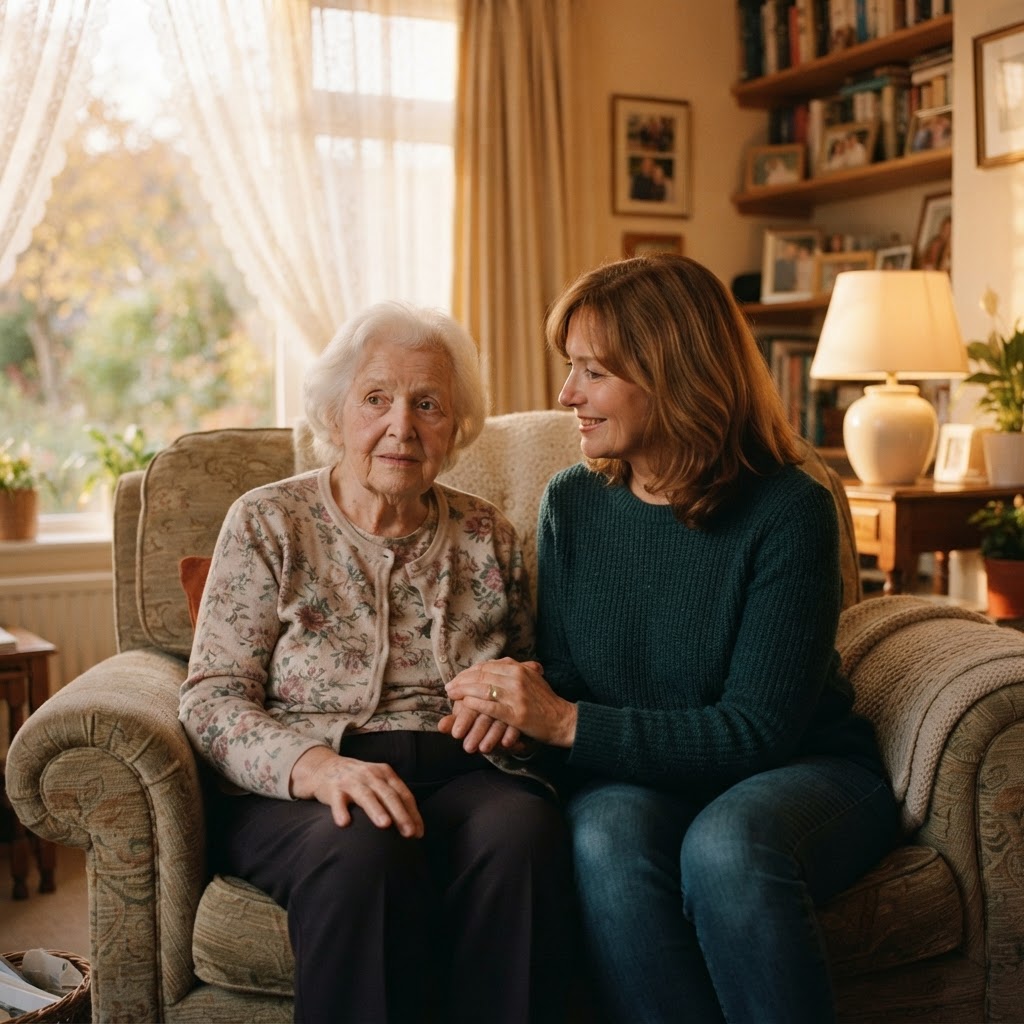
Sometimes being right is the least helpful thing you can be.
A friend recently told me about an evening spent at her parents' home during the throes of her mother's dementia, and some techniques she used to handle the situation.
Her mother became increasingly confused as the sun went down, a phenomenon commonly known as sundowning. She slipped into an earlier period of her life; her voice changed, and she sounded like a little girl again. She was anxious, convinced her own mother was waiting for her and that she needed to go home immediately.
There were plenty of facts my friend could have used. Her mother was an adult, she was safe in her own home, and her parents had been dead for decades. None of those facts addressed what her mother was actually feeling in that moment.
Instead of arguing, she suggested putting on pajamas while they waited for her mom to arrive. That calmed her for a while. Later, when she became restless again, she suggested lying down for a few minutes while they waited. Shortly after, she fell asleep.
She told me that her father handled those moments differently. He tried to ground his wife in reality, asking why she was talking like that or reminding her that her mother had been dead for twenty years. Those interactions often didn't end well.
The information he was providing her was correct, logical even. But for someone who can no longer retain new information, hearing that news can be like experiencing the loss for the first time. Correcting the facts won't likely restore a person with dementia to our reality. Sometimes it only brings fear, grief, or frustration into their world.
At these times, the goal of the conversation has to shift. It isn't to establish what is true. It is to figure out what the person needs.
Why Reasoning Stops Working
Dementia does not simply erase memories. Depending on the type and stage, it can impair language, attention span, processing speed, judgment, and orientation. A logical conversation may require cognitive abilities the brain can no longer reliably provide.
The Alzheimer's Association recommends avoiding argument and unnecessary correction as communication becomes more difficult.1 The goal is to listen for the emotion behind the words rather than fighting over the facts. That is not treating an adult like a child. It is adapting to the abilities they have right now.
Validation
My friend's response combined validation with gentle redirection. Formal Validation Therapy is a specific method of communicating with people with dementia, although evidence for its effectiveness is limited.2 In everyday conversation, validating someone means acknowledging what they are feeling, even when their understanding of events differs from yours. You can recognize that they feel frightened or miss their mother without agreeing with every detail of what they say.
Redirection
Redirection means gently shifting someone's attention when a conversation or situation is causing distress. You might put on their favorite music or look at some old photographs instead. It gives you something else to do together when repeating an explanation isn't helping.
Before You Correct: Five Questions to Ask Yourself
1. Does this actually need to be corrected right now?
Sometimes it does. If your father believes a blue bottle contains his morning medication when it is actually a cleaning product, safety overrides everything else. But if your mother thinks it is Tuesday when it is actually Wednesday, and nothing depends on the answer, you can leave the mistake unmentioned.
2. Am I correcting this for them or for me?
Sometimes our discomfort with an incorrect statement makes us feel we need to fix it. It can be hard to hear someone describe a reality that is different from our own, especially when it involves our family or something personally important. Before responding, ask what the correction would do for them. Would it help them make a decision or stay safe? Or would it mostly relieve our own discomfort with leaving the statement uncorrected? Sometimes correcting might just leave them feeling angry or embarrassed.
3. What are they feeling, and can I respond to that?
“I need to go home.”
When someone is already sitting in their living room, telling them “You live here” rarely works. “Home” often signifies security, familiarity, or a desire to escape feeling overwhelmed or confused. Addressing the feeling may work better.
- Instead of: “You live here. You've lived here for eight years.”
- Try: “You're safe here with me.” Or: “Tell me about home. What do you miss about it?”
Moving toward a relaxing activity such as making a cup of tea, looking through photos, or folding towels together can help shift their focus.
“When is Sarah coming?”
Answering the same question ten times in an hour tests anyone's patience. But to the person asking, it may feel like the first time.
Look for what is prompting the question. If they are anxious, give reassurance. If Sarah's plan is to come at 3pm:
- Instead of: “I already told you. She's coming at 3:00.”
- Try: “Sarah is coming at 3:00. You're okay. We have plenty of time.”
If they can still use visual cues, a whiteboard with simple notes (SARAH IS COMING AT 3:00) may help reduce repetitive asking.1 If they are tracking the time out of boredom, engaging them in a simple task may be more effective than answering again.
4. What could I change to make this easier?
“No. I'm not taking a shower.”
People with dementia remain adults with their own preferences and a desire for control. Automatically framing every “no” as a deficit takes away autonomy.
Before pushing back, consider what might be driving the resistance. Are they cold? Embarrassed? In pain? Frightened of the noise or water pressure?
Once you have an idea what the emotion behind the “no” is, you can better change the circumstances to make the activity more comfortable. If they are tired, maybe try again later. If they are worried about feeling cold, maybe warm the room ahead of time. If they are in pain, maybe figure out a time when their pain medication is working its best and schedule showering around that time.
5. Could something else be going on?
Redirection is a tool, not a way to make every difficult behavior disappear. Sometimes the person is telling you something important.
If someone repeatedly says they want to leave a particular room, refuses care from one specific person, says they are frightened, complains of pain, or becomes distressed during a particular activity, don't immediately assume the behavior is simply part of the dementia. Stop and look for a reason.
The same applies to accusations. Dementia can cause suspiciousness and false beliefs,3 but having dementia does not mean a person can never be mistreated, have something stolen, or accurately report that something happened.
Sometimes acute medical problems can appear as confusion, agitation, lethargy, or fear. Again, don't automatically attribute it to their dementia. Some illnesses, pain, dehydration, constipation, effects from medication, sleep disruption, and other medical problems can present as sudden cognitive or behavioral changes in older adults.4
An abrupt change warrants medical evaluation.4 Seek urgent care for severe or rapidly worsening confusion, difficulty waking, new weakness or difficulty speaking, a fall or head injury, breathing difficulty, chest pain, or other signs of an acute medical emergency.
Just Do Your Best
You won't navigate every conversation perfectly. You will probably correct things that didn't need correcting, you will likely lose patience after answering the same question a dozen times, and you may try a redirection technique that fails completely.
The goal is not perfection, but a shift in approach:
- Stop asking: “How do I make them understand that I'm right?”
- Start asking: “What are they feeling right now, and what do they need from me?”
My friend did not tell her mother that her own parents were no longer waiting for her. She helped her into her pajamas, helped her lie down, and stayed with her until she felt safe enough to rest.
Sometimes that is the win.
| Question | What to consider |
|---|---|
| 1. Does this actually need to be corrected right now? | Is there a safety consequence, or can the mistake simply pass? |
| 2. Am I correcting this for them—or for me? | Would correcting it help them, or mostly relieve my discomfort with what they said? |
| 3. What are they feeling, and can I respond to that? | Acknowledge fear, grief, loneliness, or frustration without debating the details. |
| 4. What could I change to make this easier? | Try a different activity, simpler steps, a more comfortable setting, or another time. |
| 5. Could something else be going on? | Consider whether the concern is real or something has changed that needs attention before redirecting. |
References
- Alzheimer's Association. Communication and Alzheimer's. Accessed September 16, 2026. https://www.alz.org/help-support/caregiving/daily-care/communications
- Neal M, Barton Wright P. Validation therapy for dementia. Cochrane Database Syst Rev. 2003;(3):CD001394. doi:10.1002/14651858.CD001394
- Alzheimer's Association. Suspicion & delusions. Accessed September 16, 2026. https://www.alz.org/help-support/caregiving/stages-behaviors/suspicions-delusions
- National Institute for Health and Care Excellence. Delirium: prevention, diagnosis and management in hospital and long-term care. NICE guideline CG103. Published July 28, 2010. Updated January 18, 2023. Accessed October 13, 2026. https://www.nice.org.uk/guidance/cg103
Get new articles in your inbox
Join readers who want clarity on dementia research — without having to read the journals themselves.
This article is provided for informational and educational purposes only and does not constitute medical advice. Always consult a qualified healthcare professional for questions about diagnosis, treatment, or your personal health.
Jennifer West, DMSc, PA-C
Dementia-focused clinician, clinical investigator, and Certified Dementia Practitioner with over a decade of experience in neurodegenerative disease research and patient care. Her doctoral work focused on biomarker-informed approaches to the dementia workup in primary care. Read more about Jennifer →