Lewy Body Dementia: A Common Dementia Syndrome Many People Haven't Heard Of
Most people have heard of Alzheimer's disease. Many have heard of Parkinson's disease. Far fewer have heard of Lewy body dementia, even though it is one of the most common causes of neurodegenerative dementia.1
That lack of awareness matters. Lewy body dementia can look like several different things at once: dementia, Parkinson's disease, a sleep disorder, depression, anxiety, medication sensitivity, or even a psychiatric condition. For families, this can be incredibly confusing. A person may be forgetful, but not in the same way someone with classic Alzheimer's disease is forgetful. They may see people or animals who are not there. They may seem sharp one moment and profoundly confused the next. They may begin acting out dreams years before anyone thinks to connect that symptom to the brain.
Lewy body dementia is not rare. It is just underrecognized.
What is Lewy body dementia?
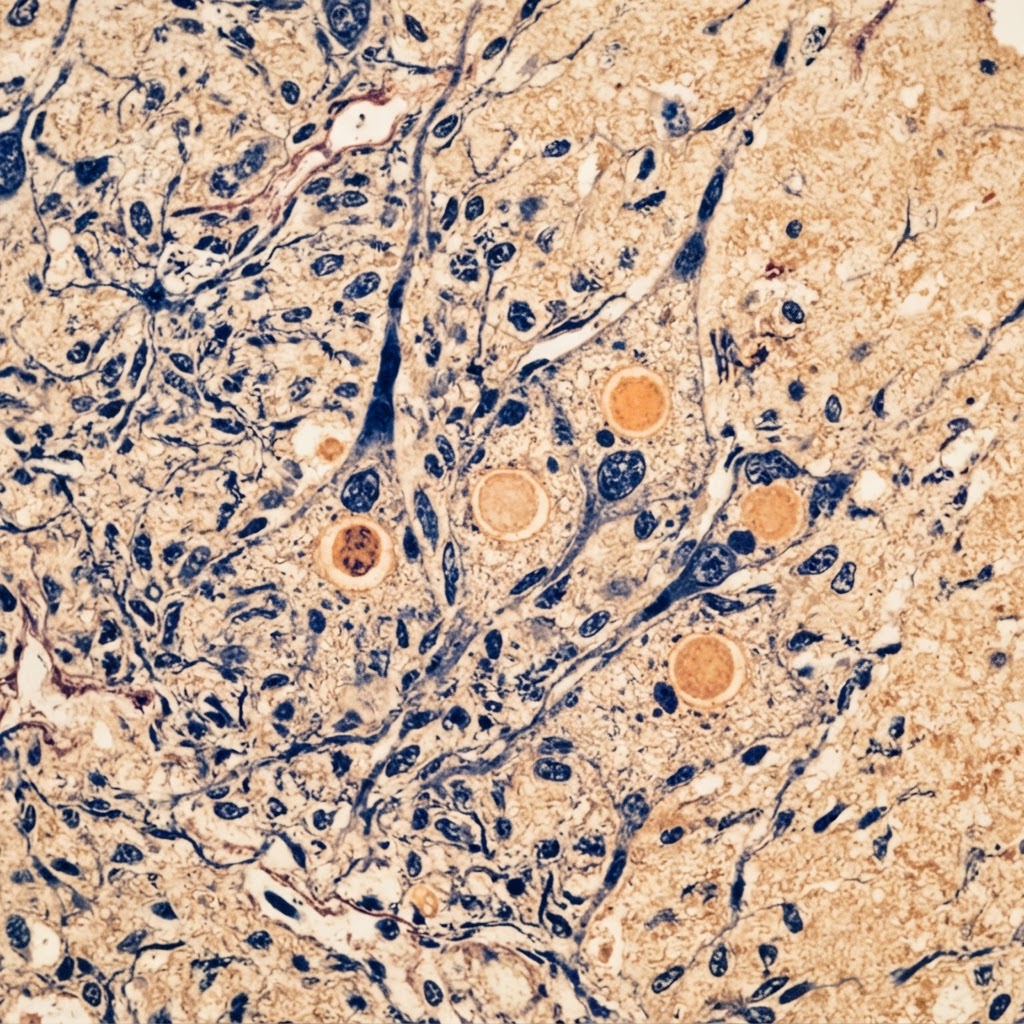
Lewy body dementia, often shortened to LBD, is an umbrella term that includes two closely related conditions: dementia with Lewy bodies and Parkinson's disease dementia.1 Both are associated with abnormal deposits of a protein called alpha-synuclein. These deposits are called Lewy bodies. They build up inside nerve cells and interfere with the way brain cells communicate. Over time, this can affect thinking, attention, movement, sleep, behavior, and the autonomic nervous system — the part of the nervous system that helps regulate things like blood pressure, digestion, sweating, and bladder function.2
One reason LBD is confusing is that it sits in the overlap between dementia and Parkinson's disease. The same protein involved in Lewy body dementia is also involved in Parkinson's disease. When cognitive symptoms appear before or around the same time as movement symptoms, clinicians often use the diagnosis dementia with Lewy bodies. When someone has established Parkinson's disease for a while and later develops dementia, it is usually called Parkinson's disease dementia.1,2
Those labels can feel technical, and in real life the distinction is not always neat. But the basic idea is this: Lewy body diseases can affect both movement and cognition. Sometimes the cognitive changes show up first. Sometimes the Parkinson's symptoms show up first. Either way, families are often left trying to make sense of a disease that does not stay in one clean category.
How common is it?
Exact numbers vary, partly because Lewy body dementia is often missed or diagnosed as something else. The Lewy Body Dementia Association estimates that LBD affects about 1.4 million people in the United States.3 A 2026 systematic review and meta-analysis of population-based studies found that dementia with Lewy bodies is primarily a late-life condition, with much higher incidence and prevalence in people age 65 and older than in younger adults.4
You may also see dementia with Lewy bodies described as accounting for roughly 5–15% of dementia cases. That estimate appears in the literature, but the exact percentage depends heavily on the population being studied and how carefully clinicians look for LBD features. In other words, the number is less fixed than we would like. The larger point is still true: LBD is common enough that clinicians and families should know about it, but complicated enough that it is often missed.5
Some people are told they have Alzheimer's disease. Others are treated for hallucinations or mood symptoms without anyone realizing those symptoms may be part of a neurodegenerative condition. Some are simply labeled as having "dementia," which may be technically true but not very helpful.
Dementia is an umbrella term. It describes a decline in thinking abilities severe enough to interfere with daily life. It does not tell us what is causing the decline. Lewy body dementia is one of the diseases that can live under that umbrella.
Who does Lewy body dementia affect?
Lewy body dementia usually affects older adults, most often people over age 60. It appears to be more common in men than women. A family history of Lewy body dementia or Parkinson's disease may increase risk, although most cases are not inherited in a simple, predictable way.6
One important clue can be REM sleep behavior disorder. This is a condition where people act out their dreams because the normal temporary "paralysis" of dreaming sleep does not work the way it should. Someone may yell, punch, kick, fall out of bed, or appear to fight something in a dream. REM sleep behavior disorder can occur years before the cognitive symptoms of Lewy body dementia become obvious, and it is now recognized as an important prodromal feature of synuclein-related brain diseases.7
Not everyone with REM sleep behavior disorder develops Lewy body dementia, and not everyone with Lewy body dementia has a clear history of dream enactment. But when dream enactment appears alongside changes in thinking, movement, hallucinations, or unexplained fluctuations in alertness, it is worth mentioning to a clinician.
Other symptoms may include constipation, dizziness when standing, urinary changes, depression, anxiety, reduced sense of smell, and changes in walking or balance. Individually, these symptoms are common and can come from many causes. Together, especially with fluctuating cognition or visual hallucinations, they can start to form a pattern.2
How is Lewy body dementia different from Alzheimer's disease?
Alzheimer's disease often begins with short-term memory problems. People may repeat questions, forget recent conversations, misplace items, or struggle to retain new information. Lewy body dementia can include memory problems too, but early on, the bigger issue may be attention, alertness, visual processing, or executive function.2
Families may describe the person as "in and out." They may have good hours and bad hours, or good days and bad days. They may seem unusually sleepy, stare off, lose track of conversations, or have episodes where they appear much more confused than expected. This fluctuation can be one of the most frustrating and misunderstood parts of the disease.
Visual hallucinations are another major clue. In LBD, hallucinations are often well-formed. A person may see children, animals, people in the house, bugs, or objects that are not there. These hallucinations may not be frightening at first, but they can become distressing, especially if they are paired with delusions or a belief that someone is stealing, hiding things, or entering the home. Recurrent visual hallucinations are one of the core clinical features used in the diagnosis of dementia with Lewy bodies.2
Movement symptoms can also point toward LBD. These may look like Parkinson's disease: stiffness, slowness, shuffling gait, softer voice, reduced facial expression, balance problems, or tremor. Not everyone has all of these symptoms, and the timing can vary. Parkinsonism is another core clinical feature in the diagnostic criteria for dementia with Lewy bodies.2
This is one of the reasons LBD is so often missed. If a person presents mainly with cognitive symptoms, they may be labeled as having Alzheimer's disease. If they present mainly with movement symptoms, they may be labeled as having Parkinson's disease. If hallucinations are prominent, they may be treated as primarily psychiatric. But Lewy body dementia often lives at the intersection of all three.
Why the diagnosis matters
Getting the type of dementia right matters because Lewy body dementia can change how symptoms are managed. People with LBD may be very sensitive to certain medications, especially antipsychotic medications. In some cases, these medications can worsen confusion, movement, sedation, or overall function. Severe neuroleptic sensitivity has been recognized as an important safety concern in dementia with Lewy bodies.2,8
This does not mean hallucinations, delusions, agitation, or distress should be ignored. It means the diagnosis matters when deciding what is safest and most appropriate. A treatment plan for LBD often has to balance cognition, movement, sleep, hallucinations, blood pressure, falls, and caregiver safety all at the same time.
Treatment is usually focused on managing symptoms and improving quality of life. Cholinesterase inhibitors, medications also used in Alzheimer's disease, may help cognition and some behavioral symptoms in people with Lewy body dementia. Recent clinical practice guidance continues to support their use in LBD for cognition, daily function, and overall dementia severity.9 Parkinson's medications may help movement symptoms, but they can sometimes worsen hallucinations or confusion. Sleep symptoms, mood symptoms, blood pressure changes, constipation, and safety concerns often need to be addressed as part of the care plan.
There is no single routine blood test that definitively diagnoses Lewy body dementia. Diagnosis is usually based on the history, symptom pattern, neurologic exam, cognitive testing, medication review, and sometimes brain imaging or specialized tests. The 2017 DLB Consortium criteria include core clinical features and supportive biomarkers, including dopamine transporter imaging, but the diagnosis still depends on putting the clinical picture together carefully.2
What families often notice first
The early signs of Lewy body dementia can be easy to explain away. Someone may seem more anxious, more tired, more forgetful, or more prone to falls. They may start seeing things out of the corner of their eye. They may nap more. They may have vivid dreams or begin moving in their sleep. They may struggle with directions, depth perception, or following a conversation in a busy room.
Because the symptoms can fluctuate, families may doubt themselves. A person can look impaired at breakfast and seem almost normal by dinner. That does not mean the symptoms are imagined. Fluctuation is part of the pattern.
This is also why caregiver observations are so important. A ten-minute office visit may not capture what is happening at home. Families should feel empowered to write down examples: hallucinations, sleep behaviors, falls, confusion episodes, medication reactions, changes in walking, and good-day/bad-day patterns. Those details can help clinicians recognize a syndrome that might otherwise be missed.
A clearer way to think about it
Lewy body dementia is not "just memory loss." It is a disease that can affect thinking, movement, sleep, perception, behavior, and the body's automatic functions. It can look different from person to person. It can overlap with Alzheimer's disease or Parkinson's disease. It can be frightening, especially when hallucinations or sudden changes in alertness appear before anyone has explained what is happening.
But naming it matters.
A more specific diagnosis can help families understand the pattern. It can help clinicians avoid medications that may worsen symptoms. It can guide expectations, safety planning, sleep management, therapy referrals, and conversations about specialty care or clinical trials. It can also give families language for something they may have been trying to describe for months or years.
Lewy body dementia is common. It is complicated. And it deserves to be better understood.
References
[1] Galvin JE. Lewy Body Dementia. Continuum. 2024.
[2] McKeith IG, Boeve BF, Dickson DW, et al. Diagnosis and management of dementia with Lewy bodies: Fourth consensus report of the DLB Consortium. Neurology. 2017.
[3] Lewy Body Dementia Association. About LBD.
[4] JAMA Neurology. Incidence and prevalence of dementia with Lewy bodies: systematic review and meta-analysis. 2026.
[5] Ghaly A, et al. Dementia With Lewy Bodies diagnosis rates vs expected prevalence. 2025.
[6] Mayo Clinic. Lewy body dementia: Symptoms and causes. Updated 2025.
[7] Neilson LE, et al. REM Sleep Behavior Disorder as a Prodromal Synucleinopathy. 2025.
[8] Abadir A, et al. Neuroleptic sensitivity in dementia with Lewy body and use of pimavanserin in an inpatient setting. 2022.
[9] Kim Y, et al. Clinical Practice Guidelines for Dementia. 2025.
This article is provided for informational and educational purposes only and does not constitute medical advice. Always consult a qualified healthcare professional for questions about diagnosis, treatment, or your personal health.