Stop 4 of 14
What is amyloid?
Helpful to know first: What is Alzheimer's disease?
The Short Answer
Amyloid-beta is a protein fragment that naturally occurs in the brain. In Alzheimer's disease, it can accumulate and clump together to form amyloid plaques — one of the hallmark biological changes of the disease.
Understand It
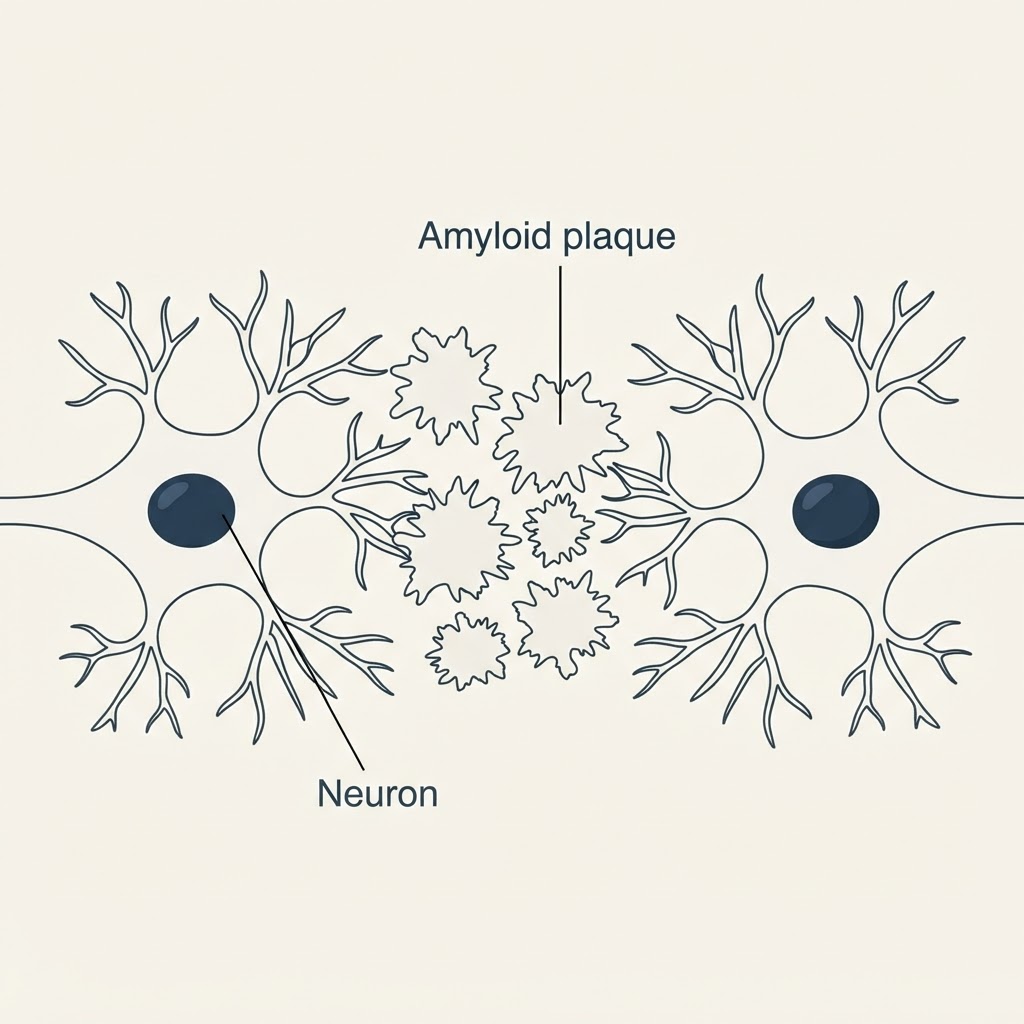
Amyloid-beta (often written as Aβ) is a small protein fragment produced when a larger protein in the brain — called the amyloid precursor protein (APP) — is cut by enzymes. This is a normal process that happens in everyone's brain.
In Alzheimer's disease, amyloid-beta begins to accumulate and clump together. These clumps take several forms:
- Oligomers — small clusters of amyloid-beta that some researchers believe may be the most harmful to nerve cells
- Plaques — larger deposits that build up in the spaces between nerve cells
Amyloid plaques are one of the two hallmark brain changes of Alzheimer's disease (the other is tau tangles, covered in the next stop).
Important: Having amyloid in the brain does not automatically mean a person has dementia. Amyloid can be present for many years before cognitive symptoms develop. It is a biological sign, not by itself a diagnosis.
Quick Check
A moment to check your understanding — this is feedback, not a test.
What is the relationship between amyloid and Alzheimer's disease?
Could you explain this to someone else?
Could you explain the difference between finding amyloid in the brain and having dementia?
The One Thing to Remember
Amyloid is a protein that can accumulate in the brain — its presence is a biological sign, not by itself a diagnosis.